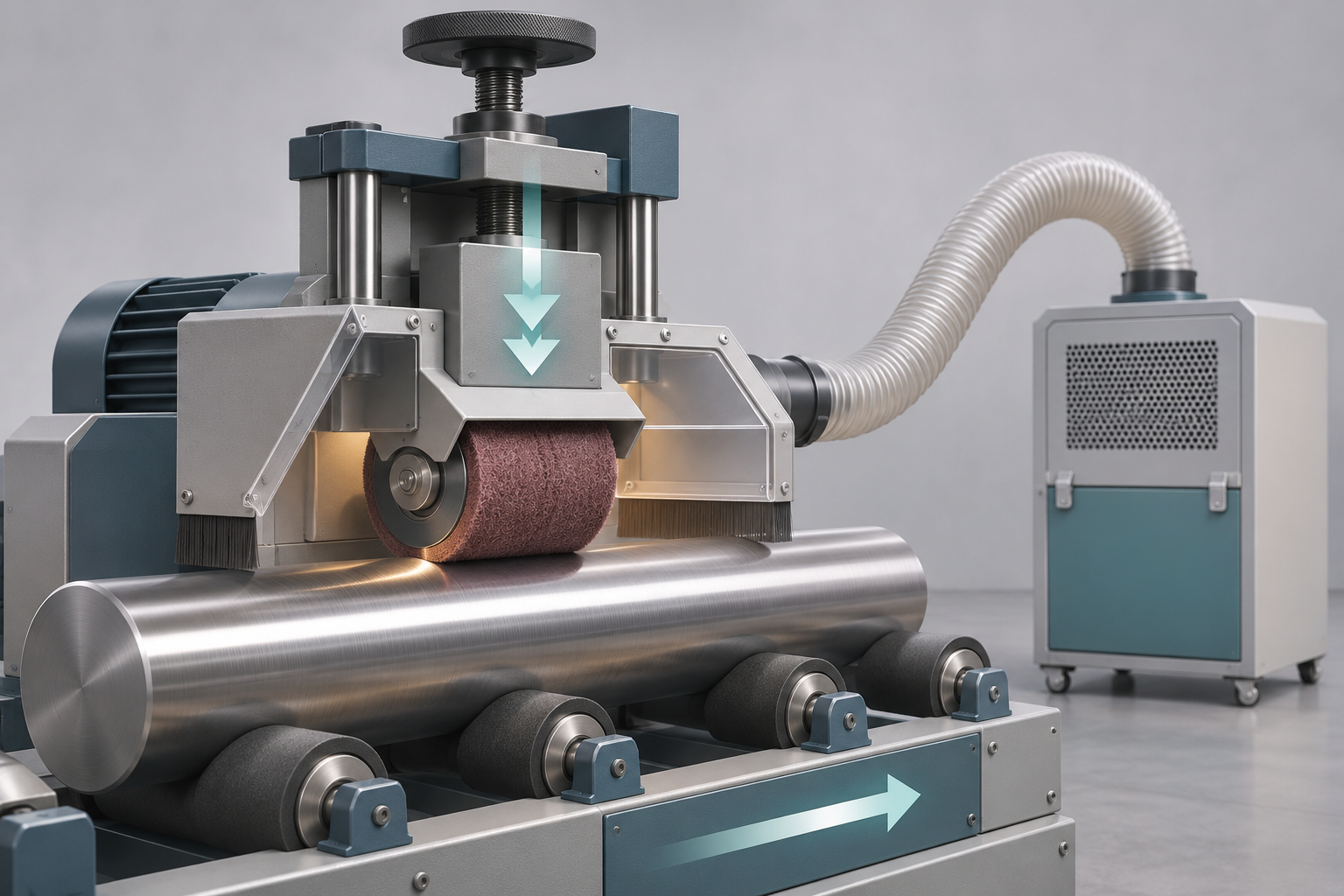
A polishing machine in a surface-finishing project is often described with a short request such as polish the rod or prepare the surface. That wording leaves the most important engineering decisions open: which areas are contacted, how pressure is applied, how feed speed follows the workpiece, where dust or debris is captured, and how the operator responds when the contact condition changes. A useful quotation turns those unknowns into measurable inputs.
Raymond’s product materials describe adjustable polishing pressure, variable-frequency feed and a pressure-drop alarm that prompts operator adjustment; a bag dust collector is listed as an optional configuration in the available product notes. These are configuration points, not a promise that one arrangement fits every part. The buyer should define the workpiece and the finishing result before selecting the machine layout.
Start with the workpiece and the surface objective
Provide the part drawing, material, length, diameter or profile, straightness, clamping points and the areas that must be polished. Mark whether the goal is removing scale, preparing for plating, blending a transition, improving appearance or meeting a customer’s surface condition. If only a section is processed, identify the start and stop positions and the parts that must remain untouched.
Describe the contact geometry. State the tool or abrasive family if already known, the number of contact zones, the expected angle, the support method and the tolerance for marks at the entry and exit. A pressure setting cannot be reviewed in isolation from tool width, part stiffness, rotation, feed and the material removed.
Define pressure control as an operating response
Ask how pressure is set, displayed and adjusted, and what the machine does if pressure falls outside the working range. A pressure-drop alarm is useful only when the operator can identify the cause and the line can be placed in a safe state. Include the sensor location, alarm wording, reset action, inspection point and record kept after an alarm.
Run a trial with more than one representative condition where practical. Inspect the surface at the beginning, middle and end of the part, and record tool wear or debris that changes the contact. Do not convert an adjustable-pressure feature into a universal surface result without specifying the part, abrasive, speed and acceptance method.
Connect variable-frequency feed to the finishing plan
Variable-frequency feed allows the line to coordinate movement with the workpiece and process, but the useful setting depends on length, diameter, tool engagement, material removal and the following plating route. State the target feed range as an engineering parameter to be tested, not as a fixed promise. Ask how the speed is displayed, locked, changed between recipes and recovered after a stop.
Check acceleration, deceleration, restart position and the risk of a visible step when the feed changes. If different workpiece sizes use the same machine, define the recipe fields and the verification step before production. The objective is a repeatable surface handoff to the next process, not simply the highest possible movement speed.
Make dust handling an explicit option
If the polishing operation generates dust or dry debris, identify the source, direction, capture point and disposal route. Confirm whether the project needs a bag dust collector or another extraction interface, and state the site’s electrical, space, noise and maintenance requirements. Optional dust handling should not be treated as an invisible accessory that can be added after the machine footprint is fixed.
| Quotation question | Why it matters |
|---|---|
| What surface must be achieved? | Links polishing to the next plating step and the actual acceptance method. |
| Where does pressure act? | Connects pressure control to tool, part stiffness and contact zones. |
| How does feed change? | Defines speed display, recipe control, restart and changeover behaviour. |
| What happens after a pressure alarm? | Creates a safe operator response and a traceable inspection point. |
| Is dust collection required? | Reserves the extraction, space and maintenance interfaces before fabrication. |
For a polishing-machine discussion with Raymond, send the part drawing, surface objective, abrasive assumptions, pressure response, feed plan, dust profile and sample acceptance method. The company’s official site presents a broad electroplating-equipment portfolio; the polishing configuration should still be confirmed against the actual workpiece and process.
- Raymond official electroplating automation portfolio
- Raymond official plating equipment production-line overview
- Raymond official contact page
A sample plan should also state how the buyer will judge the transition from polishing to plating. Mark the zones where a clamp, support or entry guide may leave a witness mark, and decide whether those zones are excluded or inspected. Record the sample orientation and number of passes so the supplier can distinguish a tooling adjustment from a pressure or feed change. If the line will serve several part families, request a small recipe matrix and identify which settings require an operator confirmation at changeover.