Heating and Cooling Capacity for Electroplating Tanks
2026-09-23
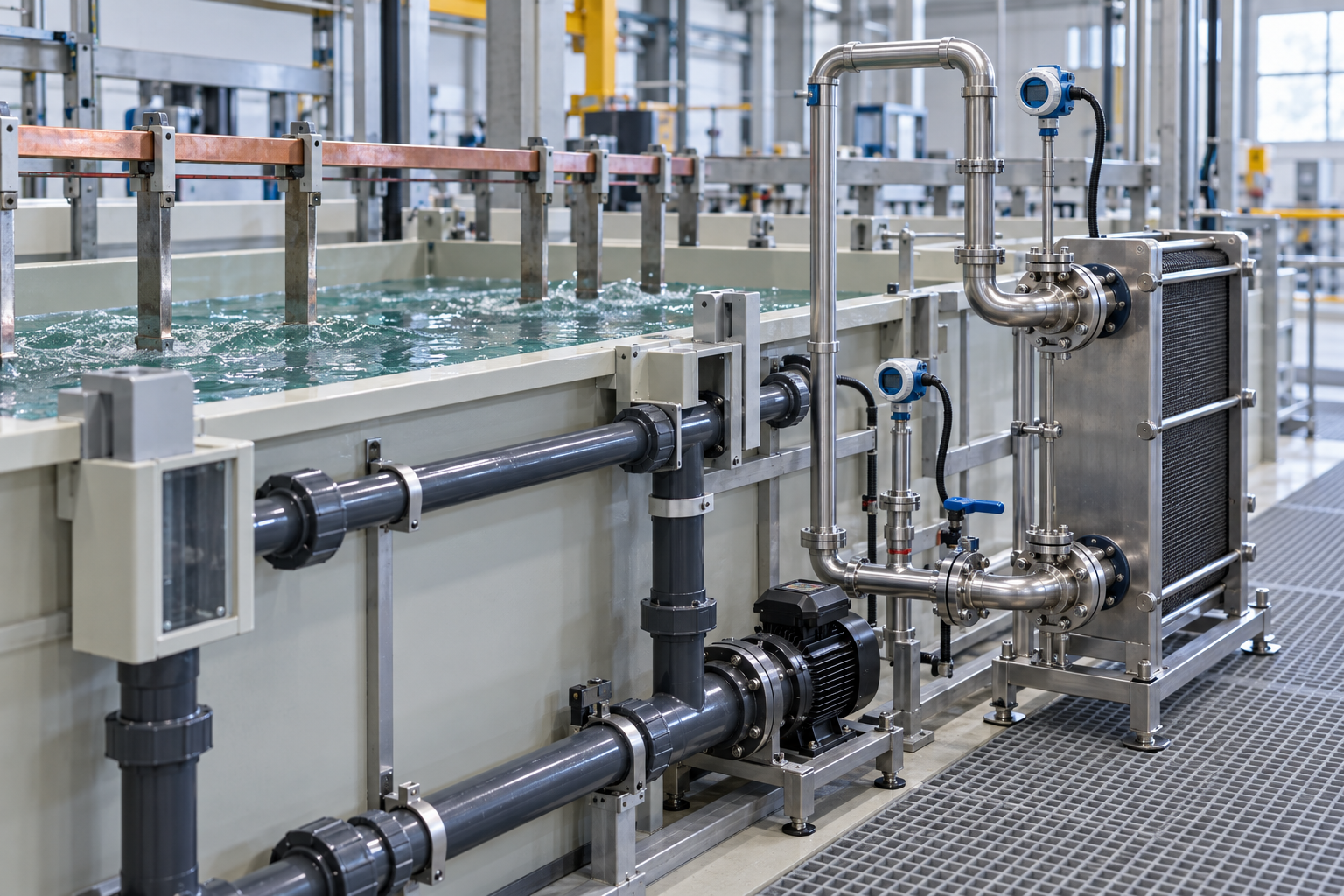
Heating and Cooling Capacity for Electroplating Tanks is not a one-variable purchasing decision. In automatic electroplating and surface-treatment production lines, material choice, equipment settings, operating conditions and downstream construction interact. A specification that lists only a product name or one headline value can leave important risks unresolved. This guide organizes the questions that buyers, engineers and suppliers should review before approving a trial or production order.
The aim is not to prescribe one universal design. Different applications can justify different limits, and final performance often depends on the complete system. Use the following framework to define service conditions, request comparable evidence and validate a representative finished article. Do not treat general guidance as a substitute for project-specific engineering, safety or regulatory review.
Build an Operating Heat Balance
Tank volume alone does not define duty; solution heating, part throughput, evaporation, ventilation, pumps and reaction heat all contribute. For project teams, this point should be converted into a written requirement rather than left as an informal expectation. Consider normal production, startup, shutdown, cleaning, storage and foreseeable upset conditions, because the most demanding combination may not appear during a short demonstration.
Separate startup and steady-production cases and document ambient and incoming-part conditions. Ask the supplier to state the method, sample preparation, tolerance, inspection frequency and action taken when a result drifts. When finished-system performance is involved, confirm it with a representative production trial and keep the approved sample and records for later lot comparison.
Account for Exhaust Losses
Strong local exhaust can remove substantial sensible and latent heat, especially from warm open tanks. The practical risk is that a single laboratory value may not represent production variation, installation details or real operating conditions. Consider normal production, startup, shutdown, cleaning, storage and foreseeable upset conditions, because the most demanding combination may not appear during a short demonstration.
Coordinate ventilation design with process temperature and estimate loss across minimum and maximum airflow. Ask the supplier to state the method, sample preparation, tolerance, inspection frequency and action taken when a result drifts. When finished-system performance is involved, confirm it with a representative production trial and keep the approved sample and records for later lot comparison.
Select Compatible Heat-Transfer Surfaces
Coil or exchanger materials must tolerate the chemistry, temperature and cleaning practice without contaminating the bath. A useful specification connects the intended service condition to evidence that both buyer and supplier can review consistently. Consider normal production, startup, shutdown, cleaning, storage and foreseeable upset conditions, because the most demanding combination may not appear during a short demonstration.
Review corrosion compatibility, pressure, isolation, leak detection and maintenance access with the process supplier. Ask the supplier to state the method, sample preparation, tolerance, inspection frequency and action taken when a result drifts. When finished-system performance is involved, confirm it with a representative production trial and keep the approved sample and records for later lot comparison.
Control Temperature Uniformity
A correctly sized heater can still create local hot zones if circulation and sensor placement are poor. This is also a communication issue: design, purchasing, production and maintenance teams should use the same definitions. Consider normal production, startup, shutdown, cleaning, storage and foreseeable upset conditions, because the most demanding combination may not appear during a short demonstration.
Confirm agitation, inlet position and sensor response on a loaded tank and tune controls to avoid excessive cycling. Ask the supplier to state the method, sample preparation, tolerance, inspection frequency and action taken when a result drifts. When finished-system performance is involved, confirm it with a representative production trial and keep the approved sample and records for later lot comparison.
Plan for Abnormal and Seasonal Cases
Cold startup, production pauses, high summer ambient and utility interruptions may require different control responses. For project teams, this point should be converted into a written requirement rather than left as an informal expectation. Consider normal production, startup, shutdown, cleaning, storage and foreseeable upset conditions, because the most demanding combination may not appear during a short demonstration.
Define recovery time, alarms and safe shutdown behavior without oversizing every component from unrelated worst-case assumptions. Ask the supplier to state the method, sample preparation, tolerance, inspection frequency and action taken when a result drifts. When finished-system performance is involved, confirm it with a representative production trial and keep the approved sample and records for later lot comparison.
Building a Reliable Procurement Brief
A good procurement brief for automatic electroplating and surface-treatment production lines should identify the application, operating envelope, interfaces, required evidence and acceptance process. It should also separate mandatory criteria from preferences. This makes supplier responses easier to compare and prevents an attractive but incomplete data sheet from becoming the only basis for a technical decision.
Before release, review the brief with the people who will process, install, operate and maintain the product or equipment. Resolve ambiguous terms, name the reference standards and agree how deviations will be handled. A small, well-documented trial usually provides more useful evidence than a large order based on assumptions.
Conclusion
Leimeng Plating Equipment recommends matching specifications to the real application and confirming critical points through representative samples or trials. Buyers should evaluate complete-system behavior, process consistency, traceability and maintainability alongside nominal specifications. This disciplined approach supports clearer quotations, smoother approvals and fewer surprises during production or operation without relying on unsupported performance claims.